PHOTO PRINCIPLES / PRINCIPLE 23
A large subject.
A small accent.
A large object does not always need another large object beside it. A small bright detail can give the eye a second place to land. Visual balance describes how attention is distributed through a frame. It is not a measurement of physical weight, and it does not require two identical halves. Start by choosing what the photograph is about; then decide whether a second element helps that idea.
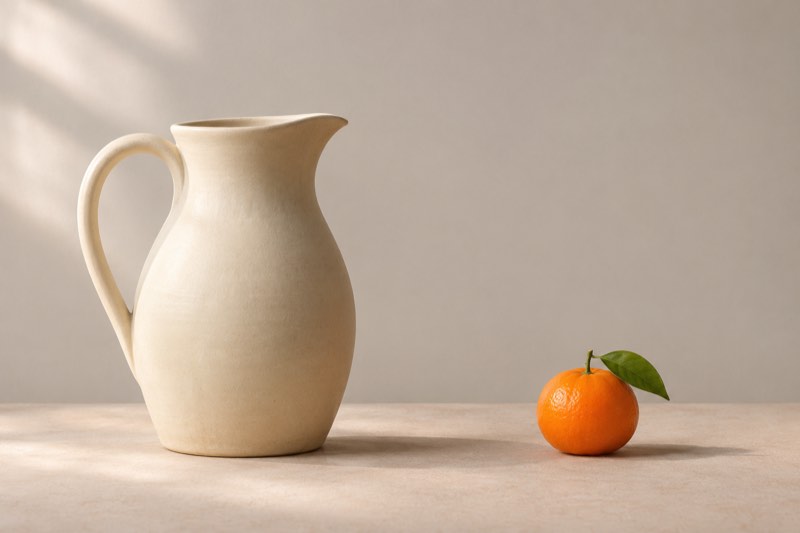
Build an asymmetrical composition with a pitcher and an orange. Learn to control attention, spacing and distractions, then practise with three photographs.
Balance begins with a main subject
In this exercise, the pale pitcher is the subject and the orange is a supporting accent. The pitcher occupies more space; the orange stands apart through its colour. Their roles are different. Nikon explains that balance can exist without complete symmetry. Use that distinction as a starting point, not a formula for judging every photograph.
Look at the image briefly, then look away. Which object do you remember first? If the fruit dominates but your intention was to describe the ceramic shape, reduce its prominence. A balanced arrangement should still have a clear purpose.
Set up a simple scene
Place a plain pitcher on a stable table beside a window. Put one orange on the other side, leaving a visible gap. Choose an uncluttered wall and remove labels, cables and bright objects from the edges. Keep the entire handle and fruit inside the frame for this first exercise.
Use soft daylight and keep the phone at one height. Do not add more props yet. The two objects and their shadows already give you several shapes to consider. Check that a dark shadow does not merge with the fruit or make the space between them look unexpectedly busy.
Adjust one relationship at a time
First make a photograph without the orange. Add it close to the pitcher and photograph again. Move only the fruit farther away for a third version. Keep your camera position, orientation and framing unchanged so you can compare the effect of spacing.
Review the actual photographs at thumbnail size. Notice whether the two objects form a tight group or invite your eye across the frame. There is no ideal distance in centimetres: object size, light and the amount of visible background change the result.
Recognise the idea in everyday scenes
At breakfast, a small folded napkin might support a large bowl, but a bright packet could become an unwanted subject. In a street photograph, a small person can provide a second point of interest beside a broad wall. Wait for a useful position without directing strangers or entering traffic.
In a portrait, an existing lamp or window may complement the person. Check whether it helps the story or simply competes with the face. You can often improve the relationship by moving your own viewpoint instead of adding something to the scene.
Mistakes and deliberate exceptions
Do not assume that putting an object on each side automatically creates balance. A tiny bright reflection or readable label can distract more than a large quiet shape. Avoid pushing the accent against the edge or filling every empty area with another prop.
A solitary subject may need no counterpoint at all. An intentionally uneven frame can express tension or isolation. Symmetry is also a valid choice. Keep the version that supports your intention, even when it does not resemble this still life.
Five-minute practice
Choose the three photographs from your pitcher experiment. Write one sentence for each: where you look first, where you look next, and whether the second object helps. Then remove the fruit once more and compare that simpler version. Ask another person what they notice before explaining your goal.
Keep one arrangement and repeat tomorrow with a different small object. Use Take PRO for your next everyday composition practice. The illustration here was created with AI to explain the exercise; it is not evidence of an app result.