PHOTO PRINCIPLES / PRINCIPLE 22
Watch the gesture.
Choose the moment.
A photograph freezes a small part of an action. Two frames taken from the same place can tell different stories: in one, the person seems to stand still; in another, a clear stride suggests a destination. Timing means choosing that part deliberately. You do not need a dramatic event to practise it. An ordinary walk is enough.
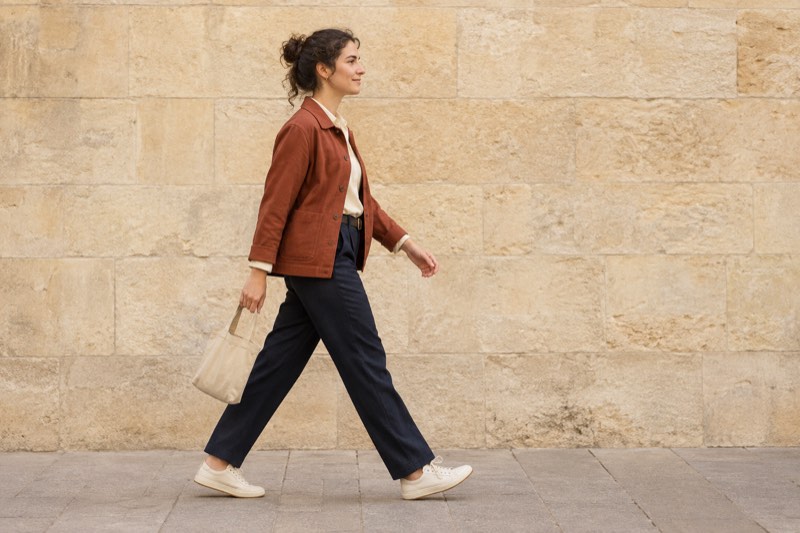
Anticipate a walking stride, prepare the background and choose a readable gesture. Practical examples, mistakes, exceptions and a five-minute exercise.
Look before you photograph
Watch a few steps without taking a picture. Notice when the feet overlap and when a gap opens between them. Follow the hands too: a hand hidden behind the body says something different from an open gesture. Nikon recommends anticipating action and practising its timing.
Decide what your photograph should communicate: movement, hesitation, concentration or relief. The biggest gesture is not automatically the most meaningful. A quiet pause can be a better answer.
Prepare a place for the action
Find a safe position beside a simple background. Frame the scene before the person enters it, leaving room for the whole body and a little space in the direction of travel. Keep away from traffic and do not ask anyone to repeat a risky action.
Hold the phone steadily at a consistent height. Check the edges and choose a place where a head will not merge with a sign or pole. This lets you spend the next few seconds watching the gesture instead of repairing the composition.
Choose a readable instant
For a walking example, try the moment when the feet are separated and both shoes are visible. Watch the approaching step, rather than waiting to notice a perfect pose and only then raising the phone. Press gently so your hand does not jerk the camera.
At a table, the important moment might be a hand just reaching a cup. In a conversation, it could be a small response after someone finishes speaking. Look for a gesture that explains the relationship, and photograph people with their agreement.
Timing is different from sharpness
A well-chosen instant can still be blurred. Movement, exposure time and camera shake influence sharpness. Begin in good daylight with a slow walk; inspect the actual photograph, not only the live preview. Do not assume a successful gesture guarantees a technically sharp frame.
If you use a burst option in your camera, select deliberately afterwards. Apple documents Burst in its own Camera app; this is not a claim about Take features. More frames give you more choices, but do not decide which moment matters.
Common mistakes and useful exceptions
Avoid following only the face while accidentally cutting off a hand or foot. Do not change your distance, framing and timing together during the first exercise: you will struggle to identify what made the difference. Avoid asking for a stiff imitation of a natural stride.
Separated limbs are a useful teaching cue, not a universal rule. Overlap can suggest intimacy, a still pose can express waiting, and intentional blur can communicate movement. Choose the frame that fits your intention rather than always selecting the widest step.
Five-minute exercise
Ask a willing friend to walk past the same point three times. Keep your position and background fixed. Photograph an early step, a separated stride and a later pause on successive passes. Compare the feet, hands, expression and background intersections.
Choose one frame that clearly says “walking” and one that feels calmer. Explain your choice in a sentence. Repeat with a smaller gesture, such as placing a cup down. Use Take PRO for your next everyday composition practice; the image here is an AI illustration, not an app result.