
BETTER PHOTOS / PRINCIPLE 05
Find the axis.
Choose the exception.
A doorway placed exactly in the centre can feel deliberate. A row of matching chairs with one turned sideways tells a different story. Use symmetry and a small interruption as two choices you can compare.
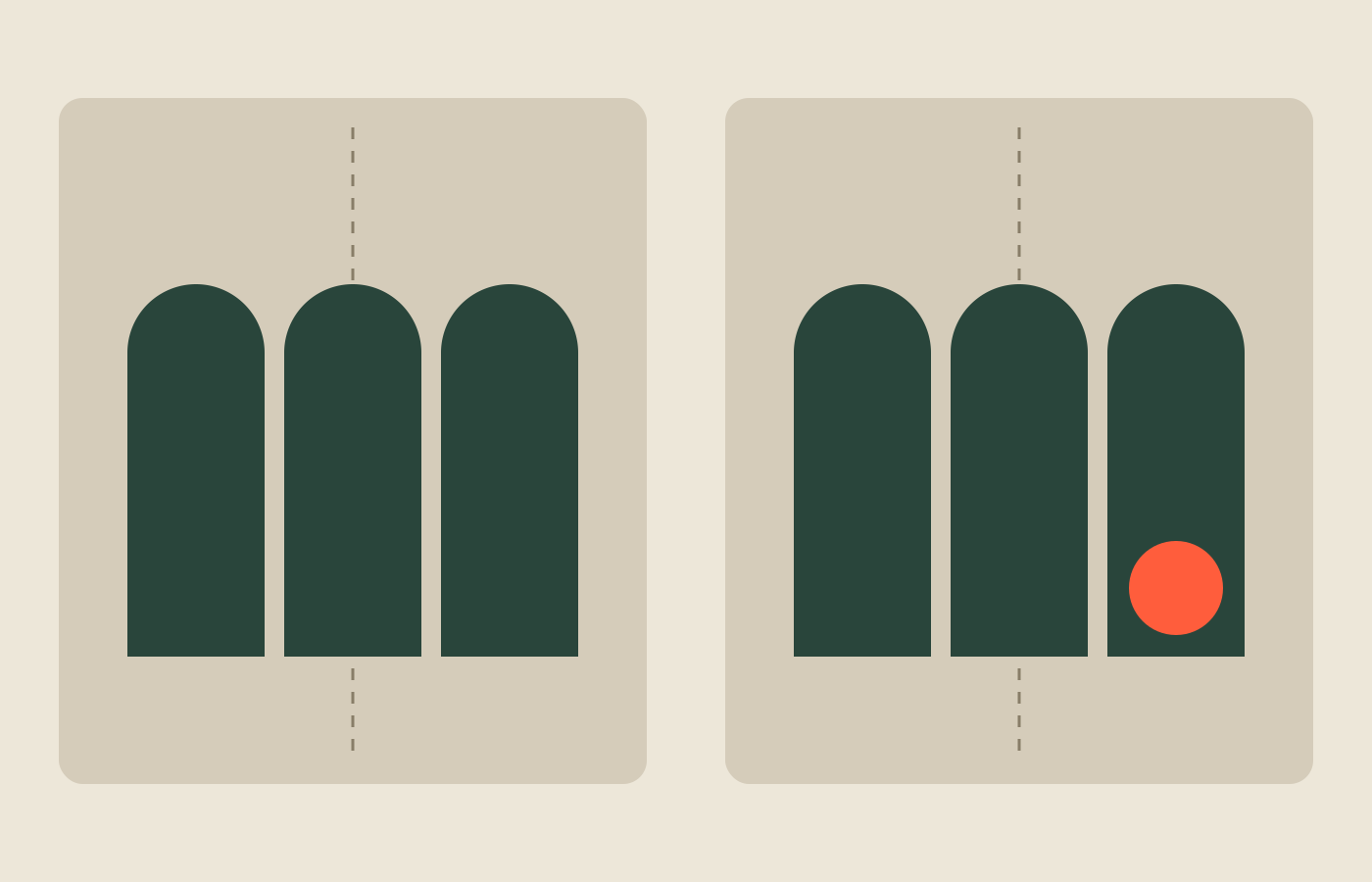
The axis is intentional.
Symmetry is a relationship, not a grid rule
Symmetry means that parts correspond across an axis. In a photograph, a doorway, a reflection or paired objects can provide that structure. Repetition is different: several windows can repeat without making the whole frame symmetrical. Name the relationship you actually see before choosing the crop.
The centre is a useful starting point when both sides matter equally. You do not need to push every subject onto a rule-of-thirds intersection. Nikon’s composition examples also show how central placement can work when the surrounding elements support it.
Align the phone before adjusting the crop
Stand opposite the centre of a stationary subject. Keep the phone facing it rather than pointing diagonally across it. Compare the gaps at the left and right edges, then check whether the top corners look similar. A small sideways move often changes the balance more usefully than rotating the picture later.
If the verticals converge because you tilt the phone upward, decide whether that perspective belongs in your photograph. Raising or lowering your viewpoint changes what you can include without the same tilt. Work from a safe, accessible position; perfect alignment is optional.
Make one clear interruption
Arrange four cups or chairs you are allowed to move. First make a regular pattern. Then change only one element: turn a handle, move one object slightly or introduce a contrasting colour. Keep the other elements steady so the comparison has a clear cause.
Ask what attracts attention first. If a bright background object wins, the intended exception is not yet doing the work. Move the frame or simplify the background before adding more changes. One interruption is a useful exercise, not a rule for every photograph.
Read the diagram, then try a real scene
The first panel repeats arches around a dashed centre line. The second adds an orange element on one side. The diagram isolates arrangement; real light, texture and shadows will also influence attention. Do not expect matching objects to have equal visual weight under different lighting.
Try a building entrance or objects on a table. For reflections, notice where the reflecting surface divides the frame and whether ripples interrupt the correspondence. Keep natural differences when they add interest instead of trying to erase every variation.
Five minutes: balanced, interrupted, off-centre
Make three images of the same arrangement: a centred version, one with a single changed element, and one from a slightly shifted viewpoint. Keep lighting and camera view similar. Look at small thumbnails first, then enlarge them to inspect edges and accidental overlaps.
Choose the image that best matches your intention. Complete the sentence “My eye goes first to…” for each frame. If the answer changes only because one picture is much brighter, repeat the comparison under steadier light.
Use the observation in your next session
Practise with your phone camera and bring the same attention to framing into Take PRO for iPhone. Choose the relationship you want to show before pressing the shutter. No automatic symmetry detector or paid feature is needed for this exercise.
Take PRO’s interface is in English. See the App Store for current availability and terms. A balanced image is an option, not a guarantee of a stronger photograph; keep the irregular version when it tells your story better.