PHOTO PRINCIPLES / PRINCIPLE 29
Photograph the shadow.
Discover its shape.
A useful subject can sit beside the object you notice first. A branch outside a window draws its own picture on the wall: stems, leaves and the gaps between them. Instead of photographing the whole plant, concentrate on that drawing. In this exercise the cast shadow becomes the subject and the wall becomes its background. The main decisions concern a readable outline, deliberate frame edges and the brightness of the surface.
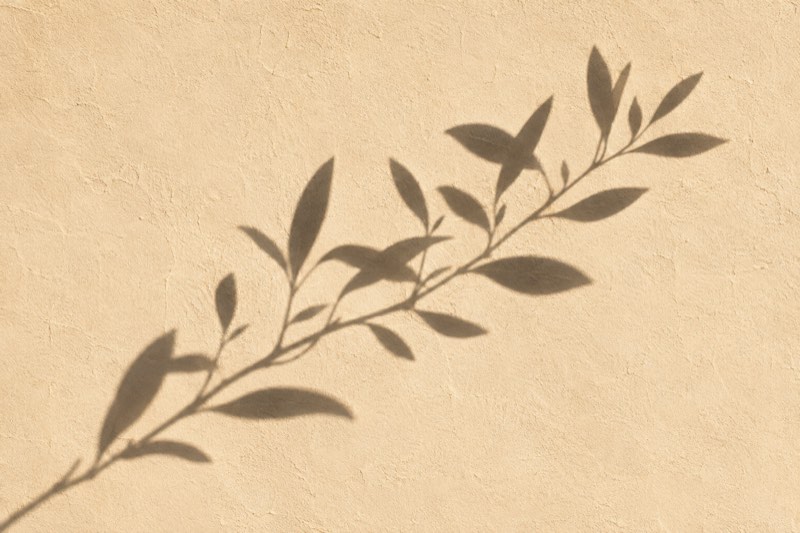
Turn a branch shadow into a phone photograph. Choose a clear outline, simplify the frame and keep texture in the bright wall.
Start with one readable shape
Look at the wall without searching for the plant. Can you recognise individual leaves? Does the shadow separate from stains and joints? Choose a section that remains understandable in a small preview. In the illustration, a diagonal stem connects the leaves while pale gaps separate their tips.
Nikon notes that shadows can add dimension and mystery. Our exercise treats a shadow as a subject in its own right. This is a cast shadow on a surface, rather than the silhouette of an object viewed against the light. You can leave its source outside the frame when the intended motif remains clear.
Watch the light and the edge
Find an existing shadow beside a window, on a wall or on a pavement. Direct sunlight often produces a defined outline; diffuse light makes a gentler boundary. Choose the character that suits the photograph. A soft shadow can be interesting too, although it may need a simpler setting.
With an object you own, compare its shadow close to the wall and farther away; the result also depends on the light source. Make photographs instead of assuming a fixed outcome. Do not break branches or move someone else’s belongings. In a breeze, wait for a brief moment when the leaves settle.
Frame the shadow deliberately
Move until the important leaf tips fit with some space around them. Exclude a socket, window corner or stain if it distracts from your idea. A small sideways movement may be enough. Check that your body is not blocking the light and adding an unintended shadow.
Make a wide version and a closer composition. The wide photograph explains the surface; the close view can turn the branch into an abstract arrangement. Not every stem needs to fit completely. A deliberate entry from an edge can make sense, while a leaf tip clipped by accident may feel unresolved.
Focus on the receiving surface
You are photographing a wall carrying a shadow, so that surface is where focus belongs. If your camera lets you select a focus point, choose some texture near the shadow boundary. If you are too close to focus, step back instead of expecting digital enlargement to repair a blurred photograph.
Inspect the bright wall. If its texture has disappeared, try reducing exposure slightly when your camera offers that control. There is no universal setting and no need to make every shadow pure black. Preserve the separation between the dark shape and the light surface. Controls and processing vary between camera apps.
Do not solve every problem with contrast
A large contrast increase can erase subtle edges and wall texture. Compare the original with a modest adjustment first. If overlapping leaves form an unreadable patch, another part of the shadow, a different moment or a wider frame may work better than a stronger edit.
An abstract shape is a valid choice, and so is showing the object alongside its shadow. For the latter, leave enough space for both and consider their relationship. You need not retain every detail in the dark area, but losing detail should support your intention rather than conceal an accidental mistake.
Exercise: three views of one wall
From a safe position, make three photographs: the shadow with its surroundings, the recognisable shape alone, and a small abstract fragment. Keep the same lens. Compare all three at an equal display size and identify which one communicates its intended subject most clearly.
Write one possible change beside each frame: more room around a leaf, less bright wall or a quieter background. Practise these choices in everyday photography with Take PRO. The branch illustration was generated with AI and is not a photograph made using the app.